Pest & Weed Control

7 Best Insecticidal Soap of 2026: Proven Control Without the Burn

Find the right insecticidal soap for your garden: effective against aphids and mites, safe for plants when used correctly.

Insecticidal soap sounds simple: spray it on pests, they die, plants stay safe. Yet many gardeners find their prized tomatoes or roses with wilted leaves after a single application. The culprit is rarely the soap itself — it's a mismatch between formula, concentration, and timing.

Marketing often promises instant knockdown, but most soaps work only on contact and need repeat applications. Some blends add spinosad or essential oils for extra punch, but those come with their own trade-offs for beneficial insects or plant sensitivity.

The smart approach is matching the product to your specific situation: a concentrate for large gardens, a ready-to-use for a few houseplants, and a gentler formula for sensitive plants. This guide focuses on which products actually deliver without collateral damage.

1

Bonide Captain Jack's Super Soap

Top Pick
Bonide Captain Jack's Super Soap

Caterpillars, tough pests

Our Score 9.0/10
Check Price

Worth Noting

  • Spinosad may harm beneficial insects if sprayed directly on blooms
  • Sprayer nozzle can leak or produce an inconsistent stream in some bottles.
Form
Ready-to-Use
Volume
32 fl oz
Key Pests
Aphids, caterpillars, mites
OMRI Listed
Yes
Read the full review

Bonide Captain Jack's Super Soap pairs potassium salts of fatty acids with spinosad for contact and ingestion kill. This hybrid formula handles chewing pests like caterpillars that basic soap sprays often miss, while still carrying OMRI organic listing. It comes ready to use with no mixing required.

Best for organic gardeners dealing with persistent caterpillars, worms, or thrips who want stronger pest control without synthetic chemicals. Avoid spraying on open blooms — spinosad can harm bees and other beneficial insects if applied directly to flowers visited by pollinators.

Avoid spraying on open flowers; apply only to foliage to protect pollinators.

Bottom line: For gardeners with caterpillar or worm problems who want an organic solution stronger than soap alone, this hybrid RTU delivers — just mind the blooms.

2

Safer Insect Killing Soap Concentrate

Safer Insect Killing Soap Concentrate

Large organic gardens

Our Score 8.8/10
Check Price

Worth Noting

  • Leaf burn may happen if the concentrate is over-mixed or sprayed during peak sun hours.
  • Certain pests may need repeated applications, and control depends on thorough coverage.
Form
Concentrate
Volume
16 fl oz
Key Pests
Aphids, mites, whiteflies
OMRI Listed
Yes
Read the full review

Safer's concentrate delivers effective control of soft-bodied pests like aphids, spider mites, and mealybugs at a per-treatment cost that undercuts any ready-to-use spray. Mixing a small amount with water yields enough solution to cover large garden areas, making it a practical choice for growers who need volume without frequent reordering.

The soap works on contact and does not leave a residual effect, so repeat applications are necessary to manage ongoing infestations. Some pests may require more than one treatment, and results vary depending on how thoroughly the plant is covered. Plant damage can occur if the concentrate is mixed too strong or sprayed during direct sunlight — following label directions avoids this risk.

This product suits organic gardeners who already have a sprayer and are comfortable mixing their own solution. It is OMRI-listed and safe around pets and children when used as directed. Those who prefer grab-and-go convenience should look at ready-to-use options, while anyone covering large areas will appreciate the low per-use cost of this concentrate.

Dilute exactly per label and apply in the evening or on overcast days to prevent leaf damage.

Bottom line: This concentrate is the most cost-effective option for organic gardeners managing moderate to large areas of soft-bodied insects.

3

Bonide Insecticidal Soap RTU

Bonide Insecticidal Soap RTU

Small gardens, RTU

Our Score 8.8/10
Check Price

Worth Noting

  • Effectiveness can be inconsistent on heavier infestations or some pests like whiteflies.
  • Some plants may suffer leaf damage if sprayed under direct sunlight.
Form
Ready-to-Use
Volume
32 fl oz
Key Pests
Aphids, mites, whiteflies
OMRI Listed
Yes
Read the full review

This ready-to-use spray delivers potassium salts of fatty acids without any mixing, making it simpler than the Safer concentrate that requires dilution. The 32 oz bottle is budget-friendly, though the cost per treatment is higher than a concentrate. The trigger sprayer is handy, though some bottles leak — a quick transfer solves that.

Best for casual gardeners with a few houseplants or small outdoor beds. It works best on early infestations of aphids, mites, and whiteflies; heavy populations may need repeated applications. Avoid spraying sensitive plants in direct sunlight to reduce leaf damage risk. For larger gardens, the Safer concentrate offers better value.

If the trigger sprayer leaks, transfer the solution to a separate bottle for consistent application.

Bottom line: For casual gardeners who want a no-mix solution for small infestations, this affordable RTU is a straightforward choice — just watch the sprayer and apply in the evening to protect sensitive foliage.

4

Garden Safe Insecticidal Soap RTU

Garden Safe Insecticidal Soap RTU

Indoor plants, budget

Our Score 8.8/10
Check Price

Worth Noting

  • Sprayer nozzle may clog or deliver a weak stream
  • Some users see no reduction in pest populations
Form
Ready-to-Use
Volume
32 fl oz
Key Pests
Aphids, mites, whiteflies
OMRI Listed
Read the full review

Garden Safe Insecticidal Soap offers a ready-to-use spray that is odorless and non-toxic, making it one of the safest options for edible gardens and indoor plants. No mixing required. Unlike the budget-friendly RTU that emphasizes grab-and-go convenience, this one prioritizes peace of mind — you can spray right up to harvest without worry.

This is the right choice for indoor plant owners with minor infestations, herb growers, and households with pets or kids who value zero toxicity above all. The tradeoff is variable effectiveness: some users find it does not control pests, and the sprayer nozzle can occasionally clog or produce a weak stream.

For light infestations of aphids or whiteflies, repeated applications every few days can bring them under control. For heavy outbreaks or large gardens, the inconsistent knockdown means the top pick concentrate is a better fit.

Apply in the evening or on overcast days to reduce the risk of leaf burn on sensitive plants.

Bottom line: This is the right pick when safety is the priority — but for reliable knockdown on heavy infestations, consider the top pick concentrate.

5

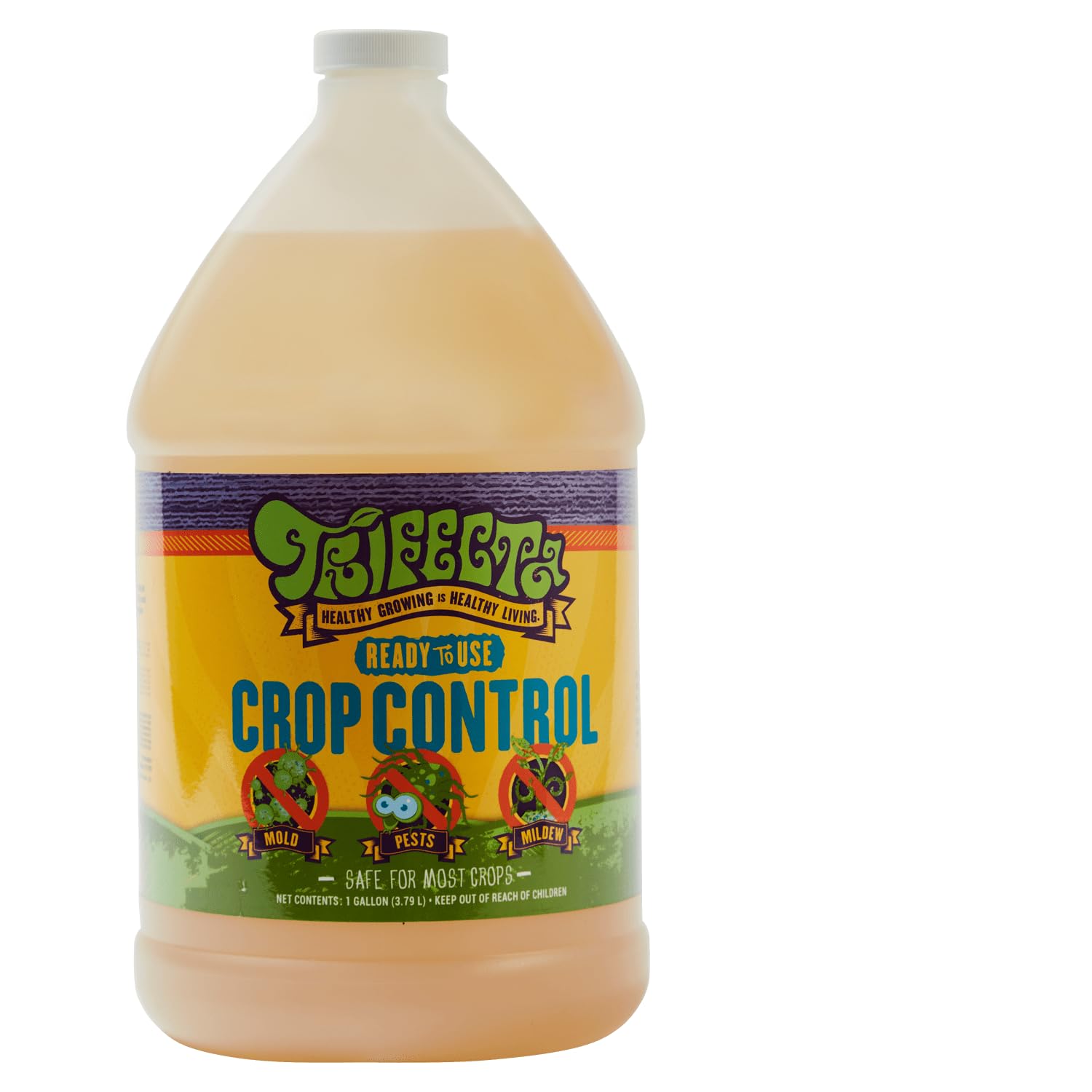
Trifecta Crop Control Concentrate

Trifecta Crop Control Concentrate

Pest & fungal

Our Score 8.4/10
Check Price

Worth Noting

  • High cost per bottle, especially given the small concentrate volume
  • Inconsistent control across pests and conditions
Form
Concentrate
Volume
128 fl oz
Key Pests
Spider mites, aphids, whiteflies
OMRI Listed
Read the full review

Trifecta Crop Control stands apart from standard insecticidal soaps by also addressing powdery mildew and other fungal issues, using a blend of rosemary, clove, and peppermint oils. While the Safer concentrate is a proven workhorse for soft-bodied pests, Trifecta adds antifungal action for growers managing both problems. The natural ingredients give it a pleasant scent, and many find it effective against spider mites and mildew when applied correctly.

This concentrate suits serious organic gardeners or commercial growers who need a multi-function product and can accept a higher per-treatment cost. The 4 oz bottle looks small relative to the premium price, and results vary — some see good control while others find it falls short on fungus gnats. For large-scale operations or persistent fungal issues alongside pests, the dual-action may justify the expense, but casual gardeners with simple infestations will find better value in a standard insecticidal soap.

Consistency improves with thorough, repeated applications — spray both leaf surfaces and reapply after rain or heavy dew.

Bottom line: Worth considering if you need both insect and fungal control and are willing to pay a premium for an all-in-one organic solution — but for most, the Safer concentrate offers more consistent pest control at a lower cost.

6

Natria Insecticidal Soap 1 Gal

Natria Insecticidal Soap 1 Gal

Large volume RTU

Our Score 8.4/10
Check Price

Worth Noting

  • Pest control results can vary; some users see no reduction in pest populations
  • Sprayer nozzle may clog or leak over time
Form
Ready-to-Use
Volume
1 gal
Key Pests
Aphids, mites, whiteflies
OMRI Listed
Yes
Read the full review

This gallon-sized RTU offers a large volume of odorless soap that’s easy to apply on many plants, and it works on common soft-bodied pests like aphids. However, effectiveness can vary between uses—some find it clears infestations while others see little change. The sprayer nozzle may also clog or leak after repeated use, and the product’s inconsistency makes it a gamble for critical pest problems compared to more reliable options like Safer or Bonide RTU.

Bottom line: Best for gardeners with many plants who want a big bottle and are willing to accept inconsistent pest control in exchange for sheer volume.

7

Earth's Ally Insecticide Concentrate

Earth's Ally Insecticide Concentrate

Light infestations

Our Score 8.2/10
Check Price

Worth Noting

  • Value may feel poor for the control achieved
  • Some users find the herbal scent too intense
Form
Concentrate
Volume
32 fl oz
Key Pests
Spider mites, aphids, whiteflies
OMRI Listed
Yes
Read the full review

Earth's Ally uses a blend of rosemary, clove, and peppermint oils that many find pleasant-smelling and safe around beneficial insects. The concentrate is easy to mix and budget-friendly. However, on common pests like aphids, mealybugs, and fungus gnats, it can struggle to provide control — functioning more as a repellent than a killer. This makes it a poor choice for anyone facing an active infestation, but suitable for very light preventative use where safety is the top priority.

Bottom line: Best suited for gardeners who prioritize safety and scent over active pest control, and only for very light infestations.

How to Choose

Concentrate vs Ready-to-Use

Concentrates require mixing with water but provide many more treatments per dollar. A 16-oz bottle of concentrate can make several gallons of spray, ideal for large gardens or recurring infestations.

Ready-to-use sprays cost more per ounce but eliminate measuring and can be grabbed at a moment's notice. They suit small indoor plant collections or occasional spot treatments.

Active Ingredients

Pure potassium salts of fatty acids kill soft-bodied insects by disrupting cell membranes on contact. They are gentle on plants but have no residual effect and only work if you hit the insect directly.

Blends with spinosad add stomach poison for chewing pests like caterpillars, but spinosad can harm bees if sprayed on open blooms. Essential oil formulas (rosemary, clove) smell pleasant but often deliver weaker control.

OMRI Listing

OMRI Listed means the product is approved for certified organic production. For home gardeners, OMRI is a trust signal that the ingredients are natural and non-synthetic.

Some products not OMRI Listed still label themselves 'for organic gardening' — these may contain undisclosed adjuvants. If organic certification matters, stick with the ORI seal.

Cost Per Treatment

Concentrates deliver the lowest cost per gallon of finished spray. A 16-oz concentrate at $15 may produce 6 gallons — less than $2.50 per gallon.

Ready-to-use sprays often cost $0.30 to $0.50 per ounce, making a 32-oz bottle around $10 for a single fill. If you spray weekly, the concentrate pays for itself within a season.

Pest Specificity

Pure soaps work best on soft-bodied insects: aphids, whiteflies, spider mites, mealybugs. They struggle with caterpillars, beetles, and hard-bodied scale.

Spinosad-enhanced soaps broaden the kill range to include caterpillars, leafminers, and thrips. Essential oil products claim wide spectra but often require more frequent reapplication to match pure soap performance.

Frequently Asked Questions