Tree & Forestry Care

6 Best Log Splitter of 2026: Match Power to Your Woodpile

Which log splitter matches your splitting volume and wood type? This guide helps you avoid overspending on tonnage and pick the right power source for your farm or garden.

Splitting firewood by hand is tiring, but buying the wrong log splitter can turn a chore into a frustration. Many budget electric models promise effortless splitting, yet thin wheels and inconsistent build quality often leave you wrestling with the machine instead of the wood.

The real challenge is matching tonnage and cycle time to your wood type and frequency. Overbuying gas power when a 6.5-ton electric suffices wastes money; underbuying leads to slow progress and fatigue. And the choice between portability and durability matters more than most first-time buyers realize.

This guide focuses on the key specs that matter for garden and farm use, so you can split confidently without overspending.

1

BILT HARD 6.5T Electric

Top Pick
BILT HARD 6.5T Electric

Budget home use

Our Score 9.2/10
Check Price

Worth Noting

  • Ram stops about 8 inches short of wedge, requiring manual finishing on some logs
  • Small wheels can struggle on rough or uneven terrain
Portability
Wheels
Power Source
Electric 15A
Max Log Length
20.5 in
Splitting Force
6.5 tons
Read the full review

The BILT HARD 6.5 Ton electric splitter holds the top spot in this class for one reason: it consistently splits logs across a wide range of sizes without demanding a premium price. The 15-amp motor and 6.5-ton hydraulic ram handle typical home firewood — up to 20.5 inches long and 9.8 inches in diameter — with steady force.

At 98 pounds, this splitter is lightweight enough for one person to move around the yard and store in a shed. The compact frame and small wheels make it easy to roll on paved or hard-packed surfaces, though they can bog down on soft lawn or gravel. The hydraulic ram provides consistent power, but it stops about 8 inches short of the wedge — you may need to reposition or manually finish the split on larger logs.

This splitter suits homeowners who split firewood seasonally and want a machine that won't break the budget or the back. The ram travel tradeoff is a minor inconvenience for the cost savings, but if you regularly split knotty or oversized logs, consider a gas model with longer stroke. For routine splits on dry hardwood, the BILT HARD gets the job done.

Position logs so the wedge contacts the center point first; if the ram doesn't push through, rotate the log 90 degrees and try again.

Bottom line: The BILT HARD is the best value in the 6.5-ton electric splitter class, offering consistent splitting at a budget price — with the caveat that some logs may need a second pass.

2

WEN 56208 Electric Log Splitter

WEN 56208 Electric Log Splitter

Homeowners, quiet

Our Score 9.2/10
Check Price

Worth Noting

  • Quality control inconsistencies can lead to early wear in some units
  • Assembly manual may be unclear, requiring extra time to interpret
Portability
Stand, wheels
Power Source
Electric 15A
Max Log Length
20.5 in
Splitting Force
6.5 tons
Read the full review

The WEN 56208 comes with a built-in stand that keeps the splitter at a comfortable working height, and the ram travels the full length of the log — so you rarely need to finish a split by hand. That’s a clear advantage over models where the ram stops short, like the top-pick BILT HARD.

This splitter targets homeowners who process a few cords per season and prefer electric operation for its quietness and zero emissions. Durability can be inconsistent — some owners note problems emerging sooner than expected — so it suits moderate, occasional use rather than heavy daily work.

Assembly takes about an hour with basic tools, though the manual could be clearer. The 15-amp motor delivers steady 6.5-ton force for most seasoned hardwood up to 10 inches in diameter, and the budget-friendly price makes it an attractive entry-level option for light splitting jobs.

Check online video guides for assembly — the printed manual can be confusing.

Bottom line: If working upright and avoiding manual finish work matters, the WEN 56208 delivers at a budget price. Just keep in mind that long-term reliability may vary unit to unit.

3

BILT HARD 20T Gas

BILT HARD 20T Gas

Heavy splitting, off-grid

Our Score 9.2/10
Check Price

Worth Noting

  • Heavy 278-lb weight requires a tow vehicle to move
  • Gas engine adds fuel and maintenance tasks compared to electric alternatives
Portability
Tow hitch, wheels
Power Source
Gas 7HP
Max Log Length
21 in
Splitting Force
20 tons
Read the full review

The BILT HARD 20-ton gas splitter starts quickly and cycles in 7 seconds, making it a strong option for splitting large logs away from a power outlet. Its towable design with a 2-inch hitch means you can haul it to remote worksites without a trailer. Unlike electric splitters that require a generator or extension cord, this unit runs on gasoline and delivers hydraulic force anywhere you can drive.

This splitter suits users who process heavy hardwood logs in large volumes and need to move the machine between locations. The heavy 278-lb frame and gas engine mean you'll need a vehicle to tow it and a willingness to handle fuel and oil changes. Long-term durability under sustained heavy use is not yet established, so it's best suited for those who accept some uncertainty in exchange for immediate splitting power at this price point.

Store the splitter with fuel stabilizer if not used for weeks to prevent carburetor gumming.

Bottom line: An effective gas splitter for off-grid splitting jobs where electric power isn't available, provided you have a vehicle to tow it and can manage combustion engine upkeep.

4

YARDMAX YS0650 Electric

YARDMAX YS0650 Electric

Light splitting

Our Score 9.2/10
Check Price

Worth Noting

  • Frame cracks or failures can occur under heavier or more frequent use
Portability
Wheels
Power Source
Electric 15A
Max Log Length
20.5 in
Splitting Force
6.5 tons
Read the full review

The YARDMAX YS0650 is the most affordable electric splitter in this comparison, and its initial performance matches the top pick for light tasks. It splits logs up to 20.5 inches long and 10 inches in diameter quickly, and assembly takes under an hour.

Where the YS0650 parts company with the top pick is long-term reliability: some units have shown frame cracks or splitting failures under sustained heavier use. This is not a machine for daily or commercial splitting, but for the homeowner splitting a few cords each season, the risk is lower.

This splitter is best suited for users who want the lowest upfront investment and can accept that it may not outlast more expensive alternatives. If you value a proven track record and intend to split wood regularly, the BILT HARD model is a stronger choice despite its slightly higher price.

Stick to dry, straight-grained logs under 10 inches in diameter to reduce stress on the frame.

Bottom line: For homeowners splitting a few cords per year, the YARDMAX YS0650 offers the lowest entry point, but expect a shorter service life than more robust models.

5

Landworks 20T Gas Splitter

Landworks 20T Gas Splitter

Large logs, off-grid

Our Score 8.8/10
Check Price

Worth Noting

  • Small wheels and low ground clearance make moving across soft or uneven ground difficult.
  • Some units may arrive with weld defects or threading issues
Portability
Wheels
Power Source
Gas 7HP
Max Log Length
20 in
Splitting Force
20 tons
Read the full review

The Landworks 20-ton gas splitter delivers a 7.5-second cycle and a 7HP engine that starts dependably, making it one of the faster mid-priced hydraulic splitters available. Compared to the towable gas model in this lineup, it offers similar splitting force for less money, without the need for a vehicle to move it.

This splitter is built for off-grid users who face large-diameter logs and want a machine that gets the job done quickly. However, build quality can vary — some units have arrived with weld imperfections or threading problems, so inspecting the splitter upon delivery is wise. The small wheels and low ground clearance also mean it is best kept on a flat work site rather than moved across uneven terrain.

Owners report that the splitter handles 24-inch logs with consistent force, and the engine starts without the pulling struggles common to some gas models. The 20-ton ram makes short work of knotty wood, and the cycle time means less waiting between splits. For those who can work around the mobility limitations and potential initial defects, the Landworks provides solid splitting capacity at a mid-range price.

Set the splitter on a level, firm surface before operation; the small wheels handle short pavement moves but not soft ground.

Bottom line: A capable mid-priced gas splitter for heavy seasonal use, provided you can accept occasional quality control issues and limited portability.

6

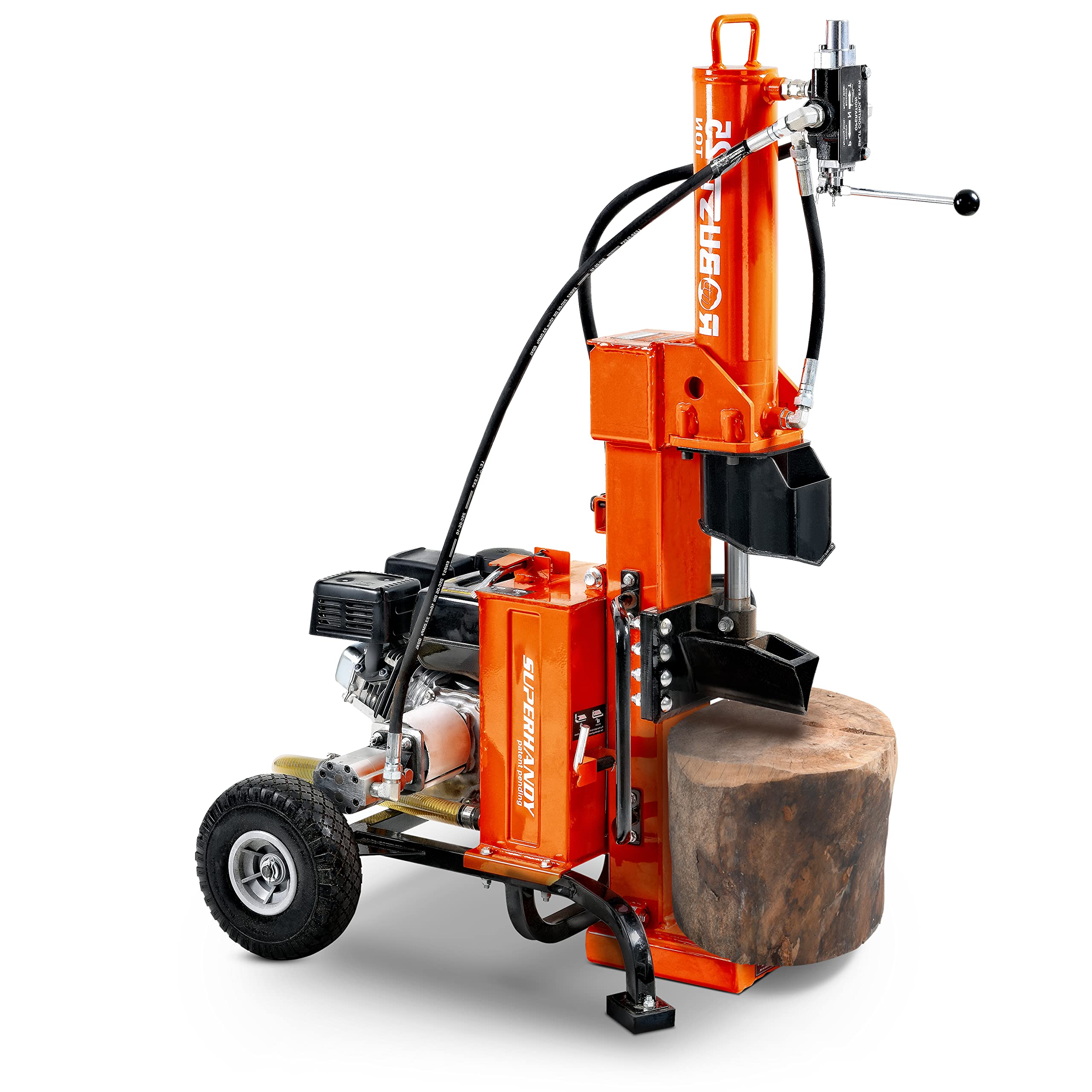
SuperHandy 25T Gas

SuperHandy 25T Gas

Maximum power

Our Score 8.6/10
Check Price

Worth Noting

  • Heavy 245-lb design limits easy maneuvering despite wheels
  • Premium price point for a home-use gas splitter
Portability
Wheels, handle
Power Source
Gas
Max Log Length
Splitting Force
25 tons
Read the full review

The SuperHandy 25T delivers the highest splitting force in this set — 25 tons — enough to handle large oak rounds that stop smaller splitters cold. Assembly is straightforward, and the controls respond predictably, making it approachable for first-time gas splitter owners.

Power is consistent on dry, straight-grained wood, and the 245-lb unit rolls on integrated wheels to the splitting site. The 7-second cycle time keeps pace with moderate output, though the engine note is typical for a gas machine — noticeable but not intrusive in open outdoor spaces.

The frame can bend under heavy use, and it struggles with wet or very hard wood — limits that matter for daily splitting but not for a few cords of seasoned hardwood per season. This splitter suits the occasional heavy user who prioritizes raw splitting force over build refinement or all-weather versatility.

The wheels are essential for moving; use the handle to tilt and roll the splitter into position.

Bottom line: Best for occasional users with large, dry logs who want high splitting force without commercial pricing.

How to Choose

Splitting Force (Tonnage)

Tonnage determines how easily the wedge pushes through a log. A 6.5-ton electric handles most softwoods and average hardwoods up to 10 inches in diameter, but knotty oak or large rounds will stall it. 20-ton gas units can split almost any residential log in a single pass.

The trade-off: higher tonnage means heavier, more expensive machines with slower cycles. For a few cords of pine per season, 6.5 tons is plenty. For dense hardwood or 16-inch oak, step up to 20 tons.

Cycle Time

Cycle time is the seconds between splits. An 18-second cycle means you stand waiting more than you split; 7 to 10 seconds keeps the work flowing. Faster hydraulics use larger pumps and engines, adding cost and weight.

For home use, aim for 12 seconds or less. If you split more than five cords a year, a sub-10-second gas splitter will save hours.

Max Log Length and Diameter

The maximum log length determines how long you can cut your firewood. Most electric splitters accept 20.5-inch logs, which matches standard firewood length. Diameter limits the size of rounds you can split without pre-cutting.

Oversized logs that exceed the diameter rating require manual breaking or a bigger splitter. If you regularly deal with 14-inch-plus logs, a gas model with a 20-ton rating is safer.

Power Source

Electric splitters are quiet, fume-free, and require minimal maintenance, but you need a power outlet within extension cord reach. Gas splitters run anywhere and produce much higher tonnage, but they are louder, heavier, and need regular engine care.

For most homesteads with power near the woodpile, electric is the practical choice. Off-grid or remote sites demand gas.

Portability

Small plastic wheels on budget electric splitters work fine on pavement but dig into grass and gravel. Larger pneumatic tires or a tow hitch make moving the splitter between split piles far easier.

If you split in one spot all season, wheel quality matters less. If you move the splitter around the property, spend extra on good wheels or a towable model.

Frequently Asked Questions