Soil & Fertilizer

10 Best Soil pH Test Kit of 2026: Accurate pH Without the Gimmicks

Stop guessing your soil pH. We identify kits that actually measure pH reliably, from quick strips to lab analysis, so you get real data for your garden.

Many inexpensive 3-in-1 meters promise pH readings but deliver a default ‘neutral’ result regardless of your soil. Reviewers often praise them for moisture and light, yet the pH function is essentially a decoration. The problem isn’t that you can’t test pH—it’s that you’re using the wrong tool for the job.

The market splits into four real pH testing methods: chemical reagent kits, mail-in lab tests, test strips, and a handful of reliable analog or digital meters. Each has a clear trade-off between speed, cost, and the depth of data you get. The right choice depends on whether you need an instant check, a seasonal baseline, or a full nutrient analysis.

This guide focuses on products where the pH function actually works—backed by consistent user results—and helps you match the method to how you garden.

1

MySoil Soil Test Kit

Top Pick
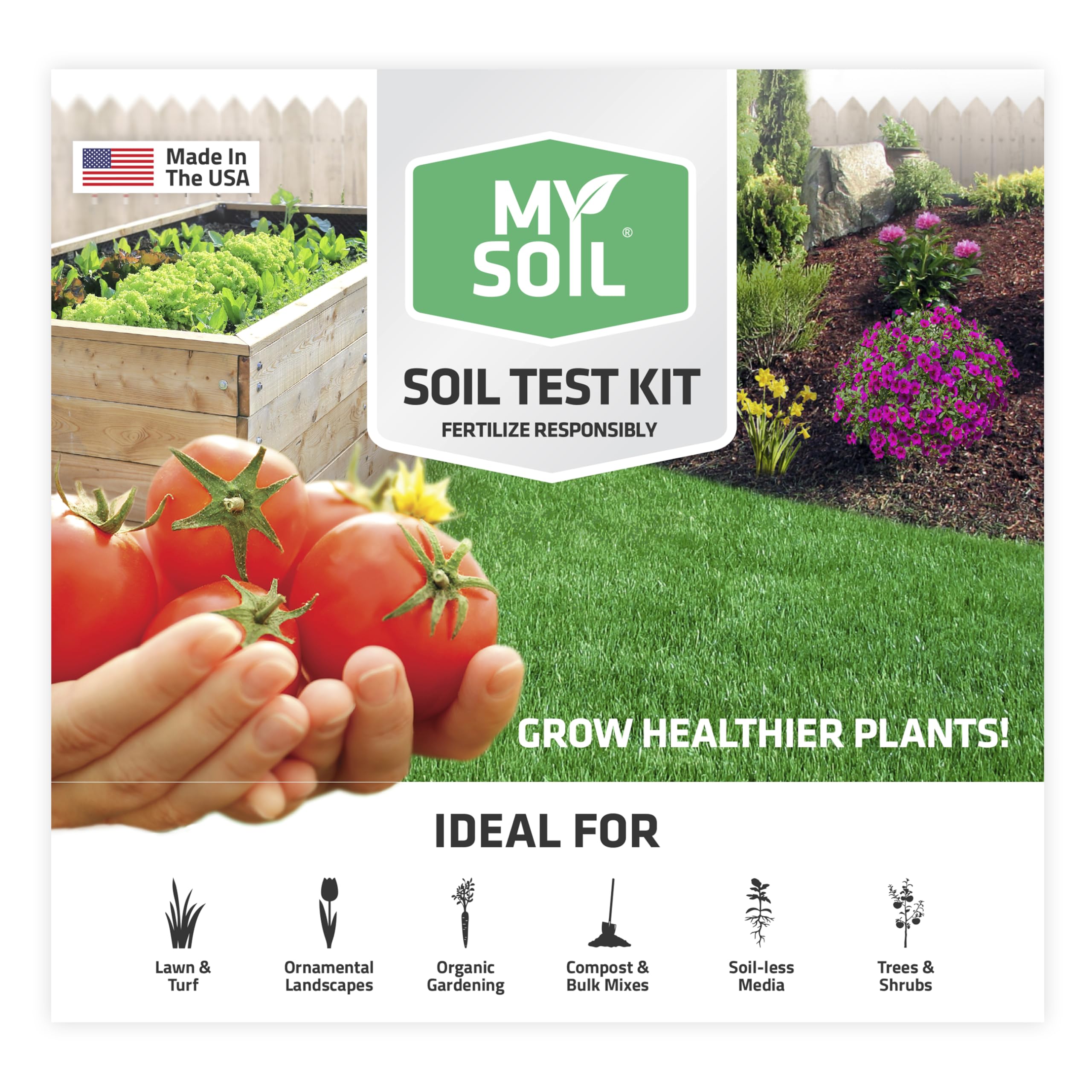
MySoil Soil Test Kit

Comprehensive analysis

Our Score 9.2/10
Check Price

Worth Noting

  • Results arrive in 6–8 days, not instant
  • Per-test cost is high if you need to sample multiple distinct areas of your property.
pH Method
Mail-in lab
Key Features
13 nutrients + pH analysis
Number of Tests
1 lab test
Read the full review

The MySoil Soil Test Kit delivers lab-grade analysis of 13 nutrients plus pH, paired with personalized amendment plans — a depth of insight no home chemical kit can match. This suits gardeners who want a thorough understanding of one or two areas and can wait 6-8 days for results. It is less practical for quick pH checks or testing many separate zones, where the per-test cost adds up quickly.

Ship samples early in the week to avoid weekend delays in processing.

Bottom line: A precision tool for the deliberate gardener who values detailed data over speed or volume of tests.

2

LaMotte Turf & Garden Kit

LaMotte Turf & Garden Kit

Serious gardeners

Our Score 9.2/10
Check Price

Worth Noting

  • Expensive refills cost nearly as much as the kit, raising the long-term cost of ownership
  • pH test may be less accurate than NPK tests in some lighting conditions
pH Method
Chemical reagent
Key Features
pH, N, P, K testing
Number of Tests
30 pH, 15 NPK each
Read the full review

The LaMotte Turf & Garden Kit delivers high accuracy for N-P-K and pH with detailed color charts, built for repeated use. It stands apart from the more affordable Luster Leaf Rapitest by targeting educators, turf managers, and serious gardeners who need consistent, lab-style results over many seasons. The catch is the high upfront cost and pricey refills that can approach the original kit's cost, making it a significant investment rather than a casual purchase.

For best pH results, compare color reactions in natural daylight rather than artificial light.

Bottom line: Best for those who need precise, repeatable NPK and pH measurements and accept the higher per-test cost.

3

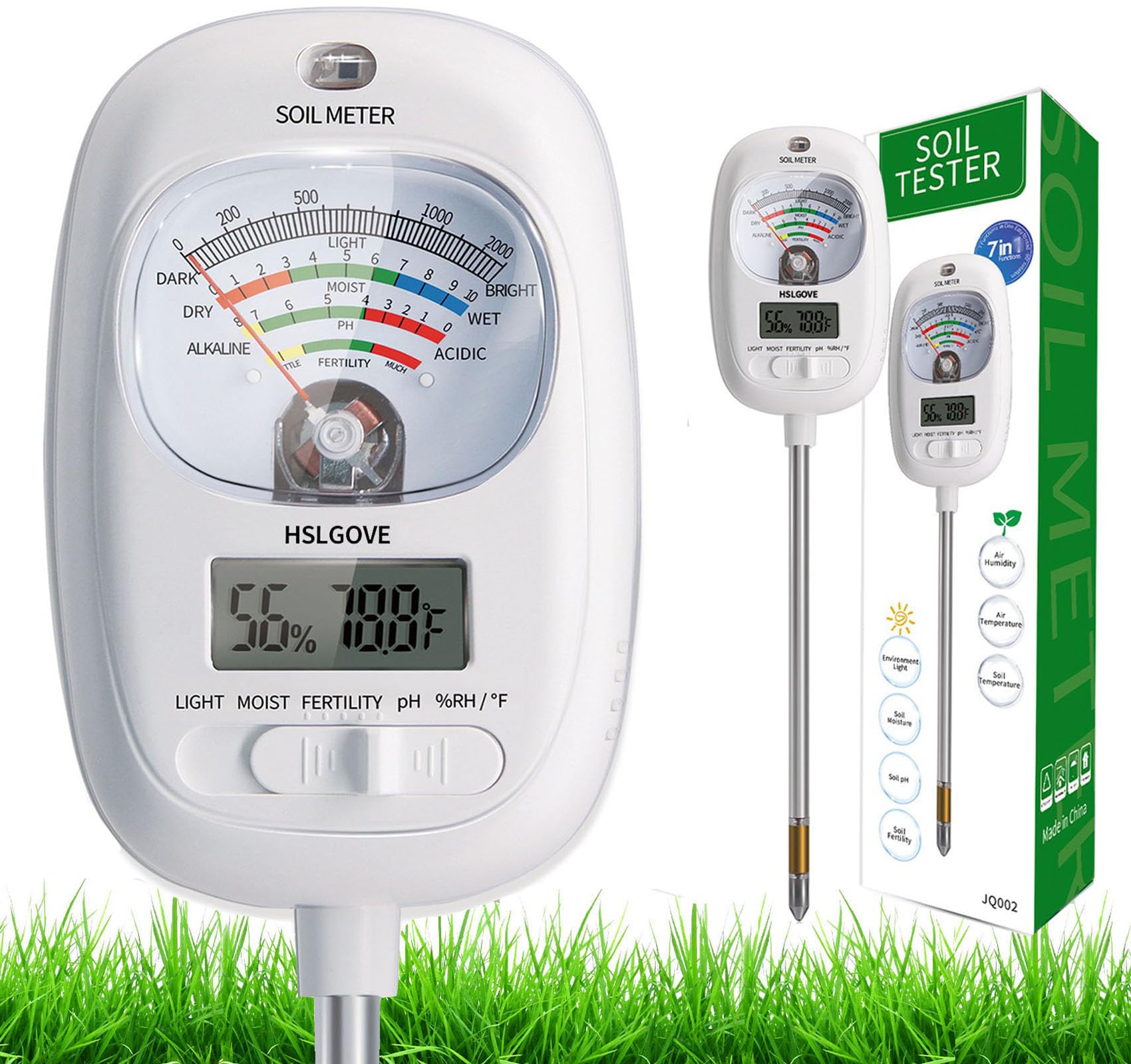
HSLGOVE 7-in-1

HSLGOVE 7-in-1

Tech-savvy gardeners

Our Score 8.8/10
Check Price

Worth Noting

  • Battery-powered with no auto-off; battery life depends on remembering to switch it off manually.
  • pH accuracy can vary between units, making it unreliable for precision pH adjustment.
pH Method
Digital + analog
Key Features
Moisture, pH, temp, air, light
Number of Tests
Continuous
Read the full review

The HSLGOVE 7-in-1 combines a digital LCD and analog dial to measure pH, moisture, light, soil temperature, and air humidity from a single probe — a wider scope than chemical test kits focused solely on pH and nutrients. Its clear display and straightforward operation suit gardeners who prefer digital data and want one tool for multiple conditions. However, the pH function can show occasional inaccuracies, and the device requires three AAA batteries with no auto-off feature, so it's best for casual checks rather than precise pH management.

Turn off the meter manually after each use to extend battery life; the display does not auto-power down.

Bottom line: A solid multifunction meter for indoor plant lovers who want digital convenience and accept that pH precision is secondary.

4

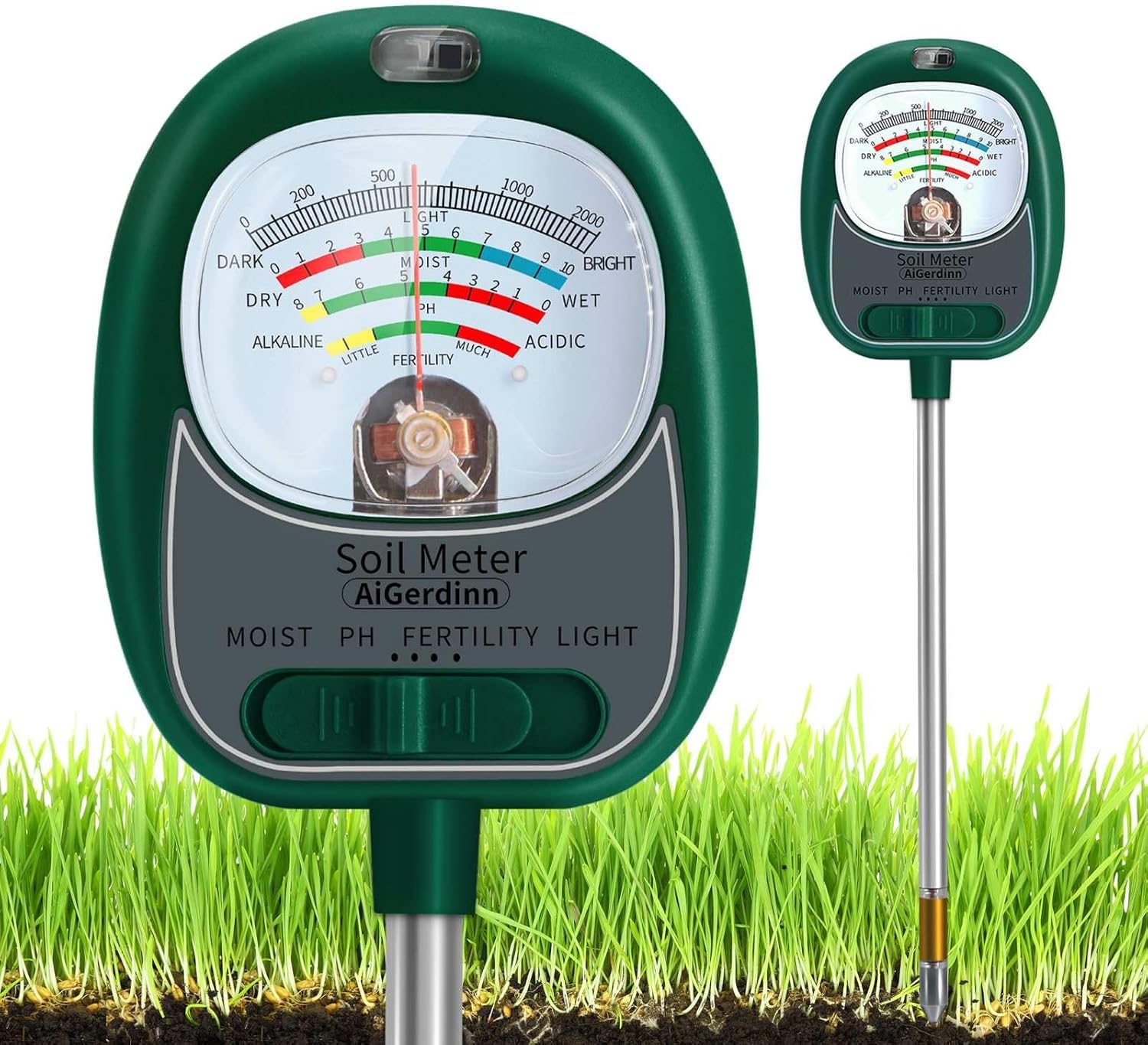
AiGerdinn 4-in-1

AiGerdinn 4-in-1

Budget buyers

Our Score 8.6/10
Check Price

Worth Noting

pH Method
Analog probe
Key Features
Moisture, pH, light, fertility
Number of Tests
Continuous
Read the full review

The AiGerdinn 4-in-1 stands out among cheap analog meters because its pH readings actually match what your plants need. The large 1.95-inch dial is easy to read, and it requires no batteries. Moisture and fertility readings are similarly dependable, making this a practical tool for basic soil checks. Best for beginners who want a simple no-battery device for pH and moisture without the guesswork of strips or the cost of chemical kits.

Bottom line: A reliable entry-level pH and moisture meter for budget-minded gardeners who don't need lab precision.

5

YAMRON Digital 4-in-1

YAMRON Digital 4-in-1

Moisture/temp

Our Score 8.6/10
Check Price

Worth Noting

  • pH readings may not match lab results, limiting usefulness for precise soil pH adjustment
pH Method
Digital probe
Key Features
Moisture, pH, temp, light
Number of Tests
Continuous
Read the full review

This digital meter delivers clear moisture and temperature readings with a backlit display, helping prevent overwatering. Its pH measurement can differ from lab results, making it unsuitable for precise pH management. Some units may show pH variability over time – best for those focused on moisture and temperature.

Bottom line: Suited for gardeners who want digital moisture and temperature tracking and can accept pH readings as approximate guides.

6

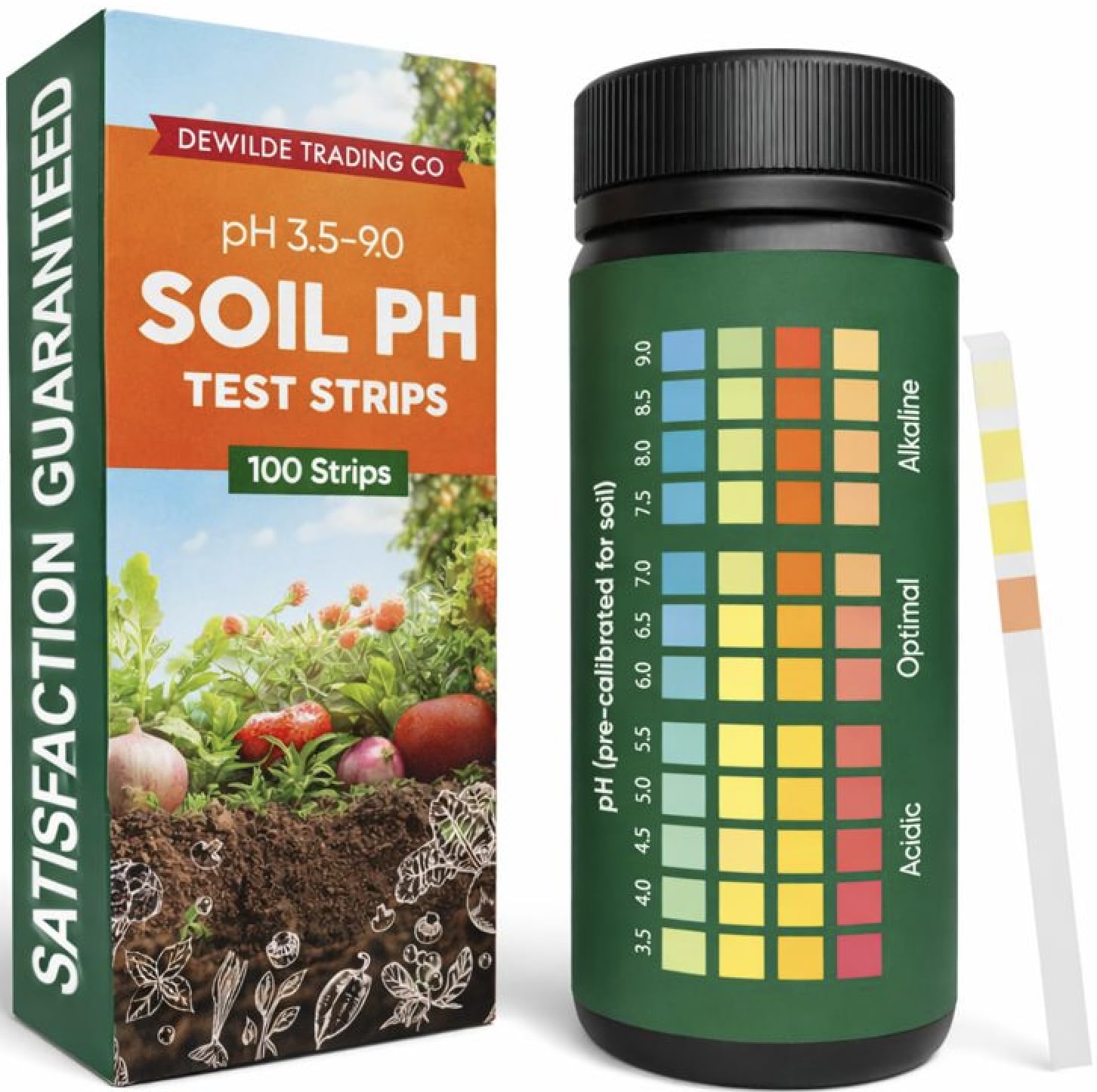
Dewilde pH Strips

Dewilde pH Strips

Budget pH screening

Our Score 8.6/10
Check Price

Worth Noting

  • Color chart comparison can give ambiguous results, especially in dim light.
pH Method
Test strips
Key Features
pH only strips
Number of Tests
100 strips
Read the full review

These strips offer a low-cost way to test soil pH across a 3.5–9 range with 100 tests per pack. The printed color chart is hard to read in typical light, making results ambiguous — especially compared to strip readers. Instructions could be clearer.

Bottom line: A workable choice for gardeners who need a rough pH estimate on a tight budget and are willing to compare colors under bright, consistent light.

7

Luster Leaf Rapitest Kit

Luster Leaf Rapitest Kit

Home gardeners

Our Score 8.4/10
Check Price

Worth Noting

  • Color comparison can be subjective; results depend on lighting and user interpretation
pH Method
Chemical reagent
Key Features
pH, N, P, K testing
Number of Tests
40 tests
Read the full review

Forty tests covering pH and the three major plant nutrients give home gardeners a complete picture of soil health for less than the cost of two single-use mail-in samples. Mixing the capsules and comparing the colored water against the chart takes a few minutes per test; the instructions are clear and the process is repeatable across multiple garden beds.

This kit suits budget-conscious gardeners who test several areas or test seasonally. The color-matching step requires good lighting and careful eye; results are subjective and can vary with lighting conditions and individual perception.

Run tests in natural daylight and compare against the chart at eye level for the most consistent readings.

Bottom line: For home gardeners who want pH and NPK data without the guesswork of cheap analog meters, the Rapitest kit offers strong value per test and repeatable results.

8

Garden Tutor pH Strips

Garden Tutor pH Strips

Frequent pH checks

Our Score 8.4/10
Check Price

Worth Noting

  • Color differentiation can be difficult, and accuracy may vary between tests.
  • Strips are hard to read in dim lighting conditions.
pH Method
Test strips
Key Features
pH only, AI reader
Number of Tests
100 strips
Read the full review

The Garden Tutor pH strips offer a fast, no-mix approach to soil pH testing with 100 strips and an AI-assisted color reader. Unlike the top pick's more comprehensive NPK kit, this is pH-only but saves time. Best for gardeners who test pH frequently and want the AI assist, but those needing precise readings or with color vision issues may find the color matching unreliable, especially in low light.

Keep the strip under consistent light — a desk lamp works well — for the AI reader to give its best match.

Bottom line: A practical choice for frequent pH monitoring if you have good lighting and don't need nutrient analysis — the AI reader adds convenience, but color matching still requires care.

9

Gain Express pH Meter

Gain Express pH Meter

Deep soil testing

Our Score 8.4/10
Check Price

Worth Noting

  • Inconsistent pH readings can occur, making it less suitable for precise gardening
pH Method
Analog probe
Key Features
Moisture, pH
Number of Tests
Continuous
Read the full review

The Gain Express Soil pH Meter stands out for its long 295mm probe that reaches deep soil layers and its sturdy build quality that feels solid in hand. However, the pH readings can vary between units, and given the premium price, this meter is best reserved for users who need that extreme probe depth and are comfortable double-checking results with other methods.

Bottom line: Best for gardeners who need to test soil deeper than 12 inches and prefer analog simplicity, but accept that pH results may require cross-checking.

10

Kensizer Soil Tester

Kensizer Soil Tester

Casual watering

Our Score 8.4/10
Check Price

Worth Noting

  • pH readings can be inaccurate, limiting use to moisture only
pH Method
Analog probe
Key Features
Moisture, pH
Number of Tests
Continuous
Read the full review

The Kensizer Soil Tester offers an easy-to-read analog dial and a good-quality feel, making it a handy tool for deciding when to water your plants. However, its pH function does not work reliably, and the probe tip may break after a few uses — this meter is best left for moisture checks only.

Bottom line: Worth considering only if your sole need is a simple moisture meter for watering decisions and you can ignore the pH dial entirely.

How to Choose

pH Measurement Method

The method determines accuracy and convenience. Analog probes are fast but nearly all under $20 produce a reading stuck at pH 7 because they lack the electrochemical cell needed to measure actual hydrogen ion activity – they register only moisture conductivity.

Chemical reagent kits use a dye that changes color with acidity, giving a real pH value. Test strips work similarly but rely on a color chart. Mail-in lab tests use professional equipment. For one-off checks, a reagent kit or strips are reliable. For continuous monitoring, only a handful of analog or digital meters with proven pH circuitry suffice.

Number of Tests

Consumable kits (strips, reagents) give a fixed number of tests – 40, 100, or more. That per-test cost matters if you plan to test multiple garden beds or repeat throughout the season. A single mail-in lab test is more expensive per sample but provides a full nutrient panel.

Analog and digital meters are reusable indefinitely, but their pH accuracy often degrades over time or after many insertions. If you test often, strips or reagents give consistent results per test; a meter is only economical if its pH function stays reliable for years.

Key Features

Many multi-function meters advertise moisture, light, and nutrient sensing alongside pH. In practice, the moisture and light readings are often useful, while the pH is a weak afterthought. If pH is your priority, choose a kit that focuses on pH – chemical reagent, strips, or a dedicated pH meter.

Extra features like temperature or air humidity add convenience but don’t affect pH accuracy. A digital backlit display helps in low light, and an AI-assisted strip reader reduces color matching errors. Prioritize the feature that matches your primary need: pH data, not a Swiss Army knife approach.

Durability and Build Quality

Analog probe meters have thin metal prongs that bend or snap if pushed into dry or rocky soil. Chemical kits and strips have no moving parts and are less prone to breakage. For meters, look for thick stainless steel probes, and always insert into moist soil to avoid damage.

Mail-in kits are single-use and require careful soil collection but no probe wear. Digital meters with replaceable probes extend lifespan. The trade-off: a reusable meter saves money over time only if its build quality survives the first season.

Frequently Asked Questions